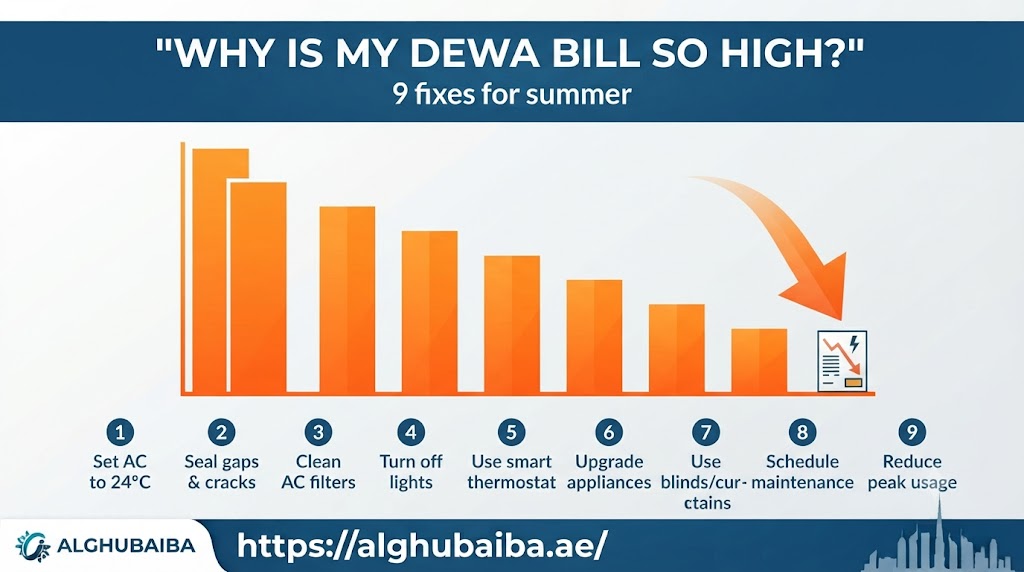
Why Is My DEWA Bill So High? 9 Fixes for Summer
In short: A summer DEWA bill is high mostly because of air conditioning, which can be well over half of household electricity when it runs day and night. Water heating, standby appliances and inefficient habits add the rest. The good news is that the biggest driver, cooling, is also the easiest to bring down without losing comfort.
Why bills jump in summer
From May to September the AC barely stops, so the single biggest line on your bill is cooling. Add hot-running water heaters, more time indoors with lights and screens on, and appliances left on standby, and the total climbs fast. Knowing which of these matters most tells you where to act first.
The biggest culprits
| Cause | Why it adds up |
|---|---|
| Air conditioning | Runs for months, the largest share of the bill |
| Water heater | Left on all day, reheats constantly |
| Standby power | Screens, chargers and set-top boxes drawing power idle |
| Old or faulty appliances | Use more energy for the same job |
Understanding the slab tariff
DEWA charges electricity in slabs, so the more you use in a month, the higher the rate on the top part of your usage. That means cutting consumption has a double benefit, because you use fewer units and you keep more of them in the cheaper band.
Nine ways to cut the bill
- Set the AC to 24 to 26 degrees instead of 18 to 20
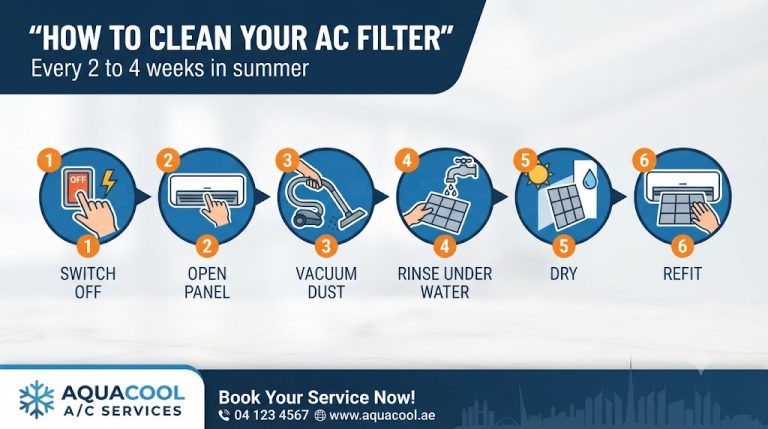
- Clean AC filters and service the units so they run efficiently
- Switch the water heater off during the day or use a timer
- Turn off appliances at the wall instead of leaving them on standby
- Use fans to stay comfortable at a higher AC setting
- Close curtains against direct sun and keep cooled rooms shut
- Run washing machines and dishwashers with full loads
- Switch to LED lighting throughout
- Fix any faulty appliance that runs hot or trips the power
These habits are the ones DEWA itself highlights for lower consumption.
Quick wins vs bigger fixes
Adjusting the thermostat, using timers and killing standby power cost nothing and work immediately. Servicing the AC, replacing an ageing water heater or upgrading old appliances cost a little upfront but keep paying back every month.
When to get help
If your bill is high with no obvious reason, something may be faulty, an AC running constantly, a water heater that never switches off, or a wiring fault drawing power. A qualified electrician can check for these. Our electrical team can trace an unexplained spike and put the fault right.
Frequently asked questions
Why is my DEWA bill so high in summer?
Mostly air conditioning, which can be over half of household electricity when it runs day and night, plus water heating, standby power and inefficient appliances.
What uses the most electricity in a Dubai home?
Air conditioning by a wide margin during summer, followed by the water heater. Together they usually make up the bulk of a hot-season bill.
How does the DEWA slab tariff work?
Electricity is charged in tiers, so higher monthly usage is billed at a higher rate on the top portion. Cutting usage saves twice by dropping into cheaper bands.
Does turning off standby power really help?
Yes. Screens, chargers and set-top boxes draw power even when idle. Switching them off at the wall trims a steady, often overlooked cost.
Should I turn off my water heater during the day?
Usually yes. Many heaters reheat all day for no reason. A timer or switching it off until needed saves energy without leaving you short of hot water.
What is the fastest way to lower my bill?
Raise the AC to 24 to 26 degrees, clean the filters, use timers on the water heater, and kill standby power. These cost nothing and work immediately.
When should I call an electrician about a high bill?
If the bill is high with no clear reason, a faulty appliance, a heater that never switches off, or a wiring fault could be drawing power and needs checking.
Unexplained spike in your bill? Al Ghubaiba Technical Services can trace the cause across your AC and wiring. Contact us to book a check.